Ten Days That Can Change Your Life
The first 10 days of Dhul Hijjah arrive quietly every year, yet they are among the greatest days Allah SWT ever created. Many Muslims prepare intensely for Ramadan, but they overlook these blessed days that Allah Himself honored in the Quran.
For some people, Dhul Hijjah means only one thing: Eid ul Adha. But for the believer who understands the virtues of Dhul Hijjah, these days are a rare opportunity to erase sins, multiply rewards, revive forgotten Sunnahs, and reconnect with Allah SWT before another year passes.
Imagine standing before Allah on the Day of Judgment and finding mountains of reward from simple acts:
- Saying “Allahu Akbar”
- Fasting one day
- Giving hidden charity
- Waking up for Tahajjud
- Reciting Quran before Fajr
These are not small deeds in these sacred days. They become enormous in the sight of Allah SWT.
The Prophet Muhammad ﷺ said:
“There are no days on which righteous deeds are more beloved to Allah than these ten days.”
— Sahih al-Bukhari
That means the best deeds in Dhul Hijjah can outweigh good deeds performed at almost any other time of the year.
In this guide, you will learn:
- The virtues of the first 10 days of Dhul Hijjah
- The top Sunnahs of Dhul Hijjah
- Authentic Quran and Hadith evidence
- A complete worship checklist
- Daily action plans
- Common mistakes Muslims make
- Powerful duas and dhikr
- How to maximize the Day of Arafah
Whether you are going for Hajj or staying at home, these ten days can transform your akhirah if you use them wisely.
What Makes the First 10 Days of Dhul Hijjah So Special?
The Islamic month of Dhul Hijjah is one of the four sacred months in Islam. These days combine the greatest acts of Islamic worship:
- Hajj
- Salah
- Fasting
- Sadaqah
- Dhikr
- Qurbani
No other days gather so many acts of worship together.
Allah SWT swore by these days in the Quran:
“By the dawn; and by the ten nights.”
— Surah Al-Fajr (89:1–2)
Many scholars, including Ibn Abbas (RA), explained that these “ten nights” refer to the first 10 days of Dhul Hijjah.
These are days when:
- sins are forgiven,
- rewards are multiplied,
- hearts soften,
- duas are answered,
- and believers compete in good deeds.
Sadly, many Muslims waste these days scrolling social media, shopping for Eid clothes, or delaying worship until Ramadan.
That is a serious loss.
Quranic Evidence About Dhul Hijjah
Allah SWT says:
“That they may witness benefits for themselves and mention the name of Allah during appointed days.”
— Surah Al-Hajj (22:28)
The “appointed days” are understood by scholars to refer to the first 10 days of Dhul Hijjah.
Allah also says:
“And remember Allah during the appointed days.”
— Surah Al-Baqarah (2:203)
These verses highlight:
- remembrance of Allah,
- worship,
- sacrifice,
- and gratitude.
The first 10 days of Dhul Hijjah are not cultural celebrations. They are deeply spiritual days rooted in revelation.
Hadith About the Virtues of Dhul Hijjah
The Prophet Muhammad ﷺ said:
“There are no days in which righteous deeds are more beloved to Allah than these ten days.”
— Sahih al-Bukhari
The companions asked:
“Not even jihad for the sake of Allah?”
The Prophet ﷺ replied:
“Not even jihad, except for a man who went out with himself and his wealth and returned with neither.”
— Sahih al-Bukhari
Think carefully about this Hadith.
Simple deeds done during these days can outweigh enormous sacrifices performed at other times.
That is why righteous Muslims throughout history treated these days seriously.
Sa’id ibn Jubayr (RA) used to strive so hard in worship during these ten days that people were amazed by his effort.
Sunnah #1 — Increase Dhikr, Takbeer, Tahleel, and Tahmeed
One of the greatest sunnahs of Dhul Hijjah is abundant dhikr.
The Prophet Muhammad ﷺ said:
“There are no days greater in the sight of Allah and no days in which righteous deeds are more beloved to Him than these ten days, so increase in them your declaration of the oneness of Allah (Tahleel), your exaltation of Him (Takbeer), and your praise of Him (Tahmeed).”
— Musnad Ahmad
Best Dhikr for Dhul Hijjah
Repeat often:
- Allahu Akbar
- La ilaha illAllah
- Alhamdulillah
- SubhanAllah
Full Takbeer
Allahu Akbar, Allahu Akbar, La ilaha illAllah, Allahu Akbar, Allahu Akbar wa lillahil hamd.
Practical Ways to Increase Dhikr
- After every salah
- While driving
- During cooking
- Walking to work
- Before sleeping
- After Fajr
Dhikr revives dead hearts.
Many Muslims think worship only means long prayers. But consistent remembrance may become the deed that saves you.
Sunnah #2 — Fasting the First 9 Days of Dhul Hijjah
One of the best deeds in Dhul Hijjah is fasting.
Especially:
- the first nine days,
- and most importantly,
- the Day of Arafah.
The wives of the Prophet ﷺ reported:
“The Messenger of Allah used to fast the first nine days of Dhul Hijjah.”
— Sunan Abu Dawood
Can You Fast All 10 Days?
No. Muslims do not fast on the 10th day because it is Eid ul Adha, and fasting on Eid is prohibited.
Benefits of Fasting in Dhul Hijjah
Fasting:
- softens the heart,
- controls desires,
- increases sincerity,
- strengthens taqwa.
If you cannot fast all nine days, then at minimum fast:
- Mondays and Thursdays,
- or the Day of Arafah.
Sunnah #3 — Maximize the Day of Arafah
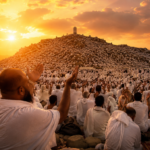
The Day of Arafah is the crown jewel of the first 10 days of Dhul Hijjah.
For pilgrims, it is the heart of Hajj.
For non-pilgrims, it is one of the greatest fasting days of the year.
Virtues of the Day of Arafah
The Prophet ﷺ said:
“Fasting the Day of Arafah expiates the sins of the previous year and the coming year.”
— Sahih Muslim
That is two years of sins forgiven through one sincere fast.
Best Dua for Arafah
The Prophet ﷺ said:
“The best dua is the dua of the Day of Arafah.”
— Jami’ at-Tirmidhi
What to Do on Arafah
- Fast sincerely
- Make nonstop dua
- Increase istighfar
- Cry to Allah SWT privately
- Ask for Jannah
- Ask forgiveness for parents
- Make dua for the Ummah
This is not a normal day.
Do not waste it in shopping centers, restaurants, or endless phone scrolling.
Sunnah #4 — Pray Tahajjud and Extra Salah
Dhul Hijjah worship should include extra prayer.
Night prayer changes people.
Tahajjud is where:
- hearts heal,
- sins are forgiven,
- duas are answered.
Allah SWT descends in the last third of the night in a manner befitting His Majesty and asks:
“Who is calling upon Me so I may answer him?”
— Sahih al-Bukhari
Practical Tahajjud Goal
Start small:
- 2 rak’ahs sincerely prayed,
- with deep dua afterward.
Do not underestimate consistency.
Extra Prayers to Increase
- Sunnah prayers
- Duha prayer
- Witr prayer
- Tahajjud
- Nafl salah
Sunnah #5 — Recite and Reflect on the Quran
The Quran should become your companion during the first 10 days of Dhul Hijjah.
Many Muslims recite Quran quickly but never reflect.
Slow down.
Read with understanding.
Quran Goals for Dhul Hijjah
Choose one:
- 1 juz daily
- 10 pages daily
- 1 surah after every salah
- Read translation daily
Powerful Surahs to Reflect On
- Surah Al-Hajj
- Surah Al-Fajr
- Surah Yaseen
- Surah Al-Mulk
- Surah Ar-Rahman
The Quran transforms hearts when approached sincerely.
Sunnah #6 — Give Sadaqah and Help Others
Charity during sacred days carries enormous reward.
Even small sadaqah matters.
The Prophet Muhammad ﷺ was the most generous of people.
Easy Sadaqah Ideas
- Feed a fasting person
- Sponsor water
- Help struggling relatives
- Support orphans
- Buy groceries for someone
- Donate secretly
Why Secret Charity Matters
Secret charity:
- purifies intentions,
- protects from showing off,
- increases sincerity.
Do not wait until you are wealthy.
Many rich people die without generosity.
Many poor people enter Jannah through sincerity
Sunnah #7 — Make Sincere Tawbah and Repentance
One of the greatest good deeds in Dhul Hijjah is sincere repentance.
Many Muslims delay tawbah assuming they have time.
That assumption destroys people.
Allah SWT says:
“Turn to Allah in sincere repentance.”
— Surah At-Tahrim (66:8)
Signs of Real Tawbah
- Feeling regret
- Leaving the sin
- Asking forgiveness
- Intending not to return
- Returning rights to people
Dhul Hijjah Repentance Checklist
Ask yourself:
- Which sins have become habits?
- Who have I wronged?
- What worship have I abandoned?
- Which relationships need repair?
These ten days may be your last opportunity.
No one is guaranteed another Dhul Hijjah.
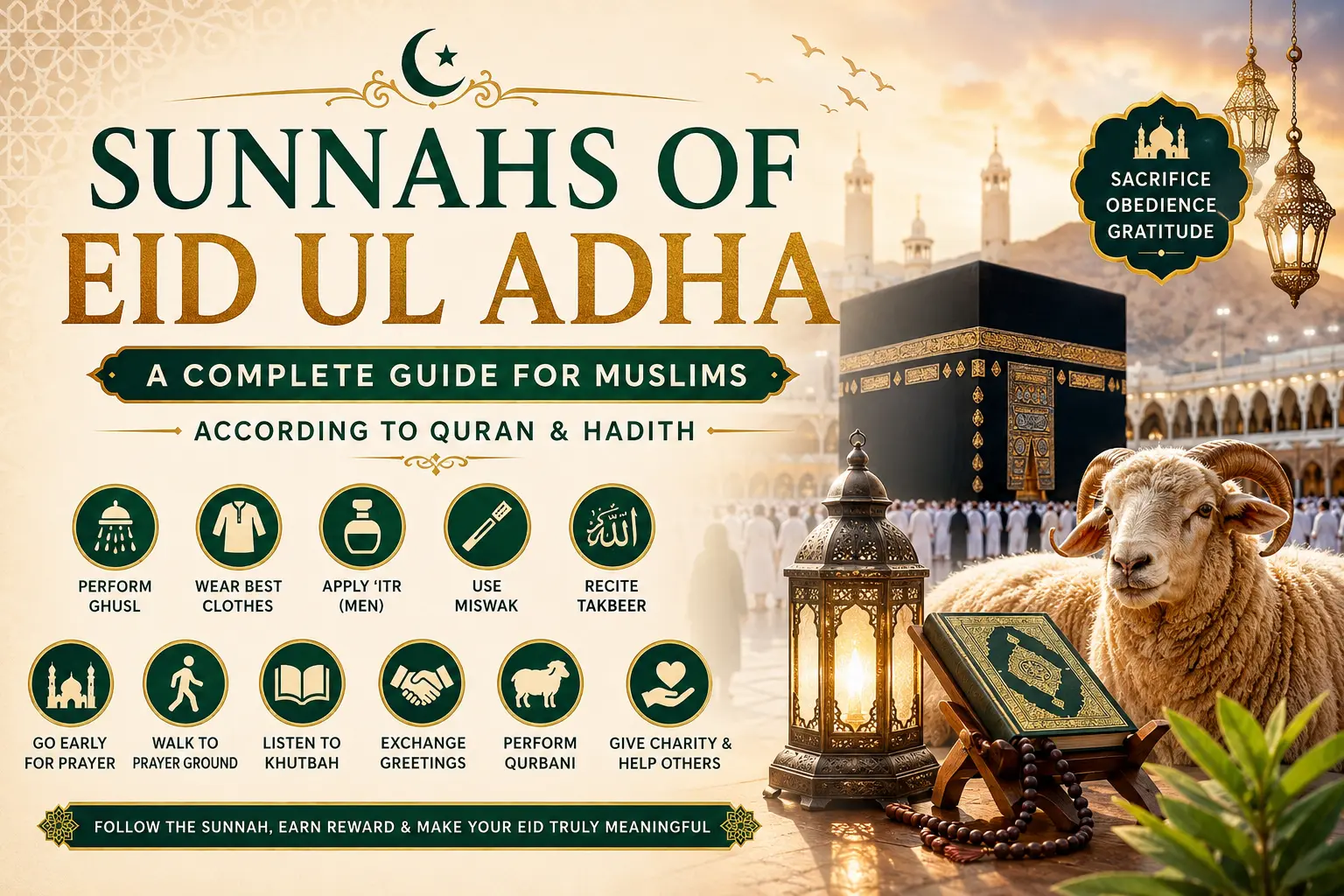
Sunnah #8 — Perform Qurbani with the Correct Intention
Qurbani is among the great acts of Eid ul Adha worship.
It commemorates the sacrifice and obedience of Prophet Ibrahim (AS).
The Real Meaning of Qurbani
Allah SWT says:
“Neither their meat nor blood reaches Allah, but what reaches Him is piety from you.”
— Surah Al-Hajj (22:37)
The lesson is not meat distribution alone.
It is:
- obedience,
- submission,
- sacrifice,
- sincerity.
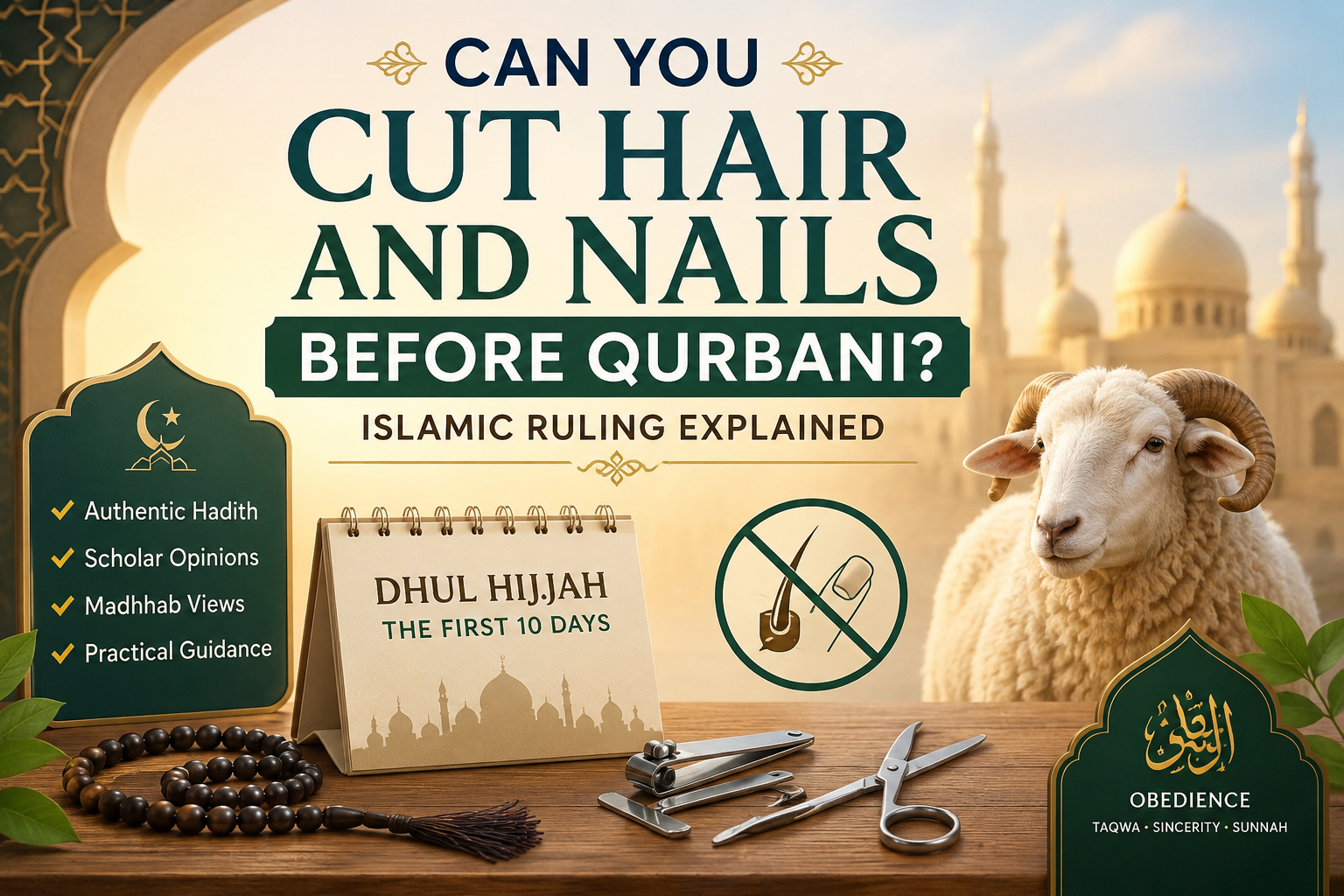
Sunnahs Related to Qurbani
Those intending Qurbani should avoid cutting:
- hair,
- nails,
until the sacrifice is completed.
This is based on authentic Hadith in Sahih Muslim.
Sunnah #9 — Make Constant Dua During Dhul Hijjah
Dua is worship.
Many people only make dua during hardship. But righteous believers constantly ask Allah SWT.
Dhul Hijjah Duas to Increase
Pray for Forgiveness
Rabbighfir li wa tub ‘alayya innaka antat-Tawwabur-Raheem.
Dua for Guidance
Allahumma ihdini fee man hadayt.
Dua for Goodness
Rabbana atina fid-dunya hasanah wa fil-akhirati hasanah wa qina ‘adhaban-nar.
Best Times for Dua
- During fasting
- Before Maghrib
- Last third of the night
- Between adhan and iqamah
- On the Day of Arafah
Keep a personal dua list.
Ask Allah for both dunya and akhirah.
Sunnah #10 — Strengthen Family Ties and Good Character
Worship is not only rituals.
Good character is among the heaviest deeds on the scale.
Simple Ways to Improve Character
- Forgive relatives
- Call parents
- Visit family
- Control anger
- Speak gently
- Avoid arguments
The Prophet ﷺ said:
“The best of you are those best to their families.”
— Jami’ at-Tirmidhi
A person may pray all night but destroy rewards through arrogance, gossip, or family ظلم.
Dhul Hijjah is a time to purify both actions and character.
Daily Worship Plan for the First 10 Days of Dhul Hijjah
Day 1–7
Focus on:
- fasting,
- Quran,
- dhikr,
- charity,
- Tahajjud.
Daily checklist:
- Fajr in congregation
- Morning adhkar
- Quran reading
- 100x Astaghfirullah
- 100x Salawat upon Prophet ﷺ
- Charity daily
- Night prayer
Day 8 — Yawm at-Tarwiyah
Increase:
- dua,
- takbeer,
- preparation for Arafah.
Day 9 — Day of Arafah
Priority actions:
- Fast
- Continuous dua
- Cry in repentance
- Make takbeer frequently
- Give charity
Day 10 — Eid ul Adha
- Pray Eid salah
- Perform Qurbani
- Feed others
- Maintain family ties
- Continue dhikr
Common Mistakes Muslims Make in Dhul Hijjah
1. Treating Dhul Hijjah Like Ordinary Days
These are sacred days.
Act like it.
2. Only Focusing on Eid Shopping
Many people spend more effort preparing clothes than preparing hearts.
3. Neglecting the Day of Arafah
Missing Arafah fasting without excuse is a major loss.
4. Forgetting Takbeer
The companions used to recite Takbeer publicly during these days.
5. Delaying Repentance
People assume they will repent later.
Later is never guaranteed.
6. Turning Worship Into Social Media Content
Some people document every act of worship online.
Protect sincerity.
The first 10 days of Dhul Hijjah are the most beloved days to Allah for performing righteous deeds. Muslims should increase worship through fasting, dhikr, Quran recitation, charity, Tahajjud, repentance, and dua. The Day of Arafah is especially important because fasting it expiates the sins of two years according to authentic Hadith.
What are the virtues of the first 10 days of Dhul Hijjah?
The virtues of Dhul Hijjah include multiplied rewards, forgiveness of sins, the opportunity for Hajj, the Day of Arafah, increased acceptance of good deeds, and closeness to Allah SWT. The Prophet Muhammad ﷺ said no righteous deeds are more beloved to Allah than deeds performed during these days.
Can you fast all 10 days of Dhul Hijjah?
Muslims may fast the first nine days of Dhul Hijjah. However, fasting on the 10th day, Eid ul Adha, is prohibited in Islam.
What should Muslims do during Dhul Hijjah?
Muslims should increase dhikr, fasting, Quran recitation, charity, dua, repentance, Tahajjud, and good deeds in Dhul Hijjah. They should also avoid wasting time and focus on sincere worship.
What is special about the Day of Arafah?
The Day of Arafah is one of the holiest days in Islam. Fasting this day expiates the sins of the previous and coming year for non-pilgrims. It is also the best day for making dua.
Which deeds are best in Dhul Hijjah?
The best deeds in Dhul Hijjah include:
- fasting,
- Takbeer,
- Tahleel,
- Tahmeed,
- Quran recitation,
- charity,
- Tahajjud,
- repentance,
- Qurbani,
- and sincere dua.
Is Dhul Hijjah better than Ramadan?
The first 10 days of Dhul Hijjah are considered the best days of the year, while the last 10 nights of Ramadan are considered the best nights. Both are extremely virtuous and unique.
Conclusion
The first 10 days of Dhul Hijjah are not ordinary days.
They are an invitation from Allah SWT.
An invitation to:
- return,
- repent,
- worship,
- sacrifice,
- and transform your heart.
Most people will let these days pass distracted and unchanged.
Do not be one of them.
Increase your dhikr.
Fast sincerely.
Stand in Tahajjud.
Read Quran deeply.
Give charity quietly.
Cry to Allah privately.
Because one sincere act during the first 10 days of Dhul Hijjah may become the reason Allah forgives your lifetime of mistakes.
Start today before the opportunity disappears.