There is something profoundly different about Eid ul Adha. It is not simply a festival. It is a day soaked in memory — the memory of a father who raised the blade, a son who bared his neck, and a Lord who called out: enough, Ibrahim, you have fulfilled the vision.
Every ritual of this blessed day carries that weight. When you take your Ghusl before Fajr, when you recite the Takbeer as you walk to the prayer ground, when you offer your Qurbani — you are not merely performing actions. You are stepping into a story that began thousands of years ago and still speaks to the deepest questions of faith: What does it truly mean to submit?
Following the Sunnahs of Eid ul Adha is how we honor that story. It is how we connect to the Prophet Muhammad ﷺ, who taught us not just what to celebrate, but how — with body, soul, intention, and community. This guide walks you through every authentic Sunnah of the day, grounded in Hadith and Islamic scholarship, so you can experience Eid the way it was always meant to be lived.
Why the Sunnahs of Eid ul Adha Matter More Than You Think
It is easy to reduce Eid to food and family. And while those are beautiful parts of it, the Prophet ﷺ gave us a rich, layered structure for the day — a structure that turns every act from waking up to offering your sacrifice into an act of worship.
Following the Sunnah on Eid is not about rigid ritual. It is about alignment. When you mirror the Prophet’s ﷺ actions, you plug into something bigger than yourself. You join the ummah across centuries. You tell Allah, I care enough to do this the right way.
Ibn Rajab al-Hanbali wrote beautifully that the righteous predecessors used to consider how to prepare for Eid months in advance — not by buying gifts, but by multiplying good deeds, repenting, and drawing close to Allah in the first ten days of Dhul Hijjah. That spirit of intentional preparation is itself a Sunnah.
So let us walk through the day, act by act.
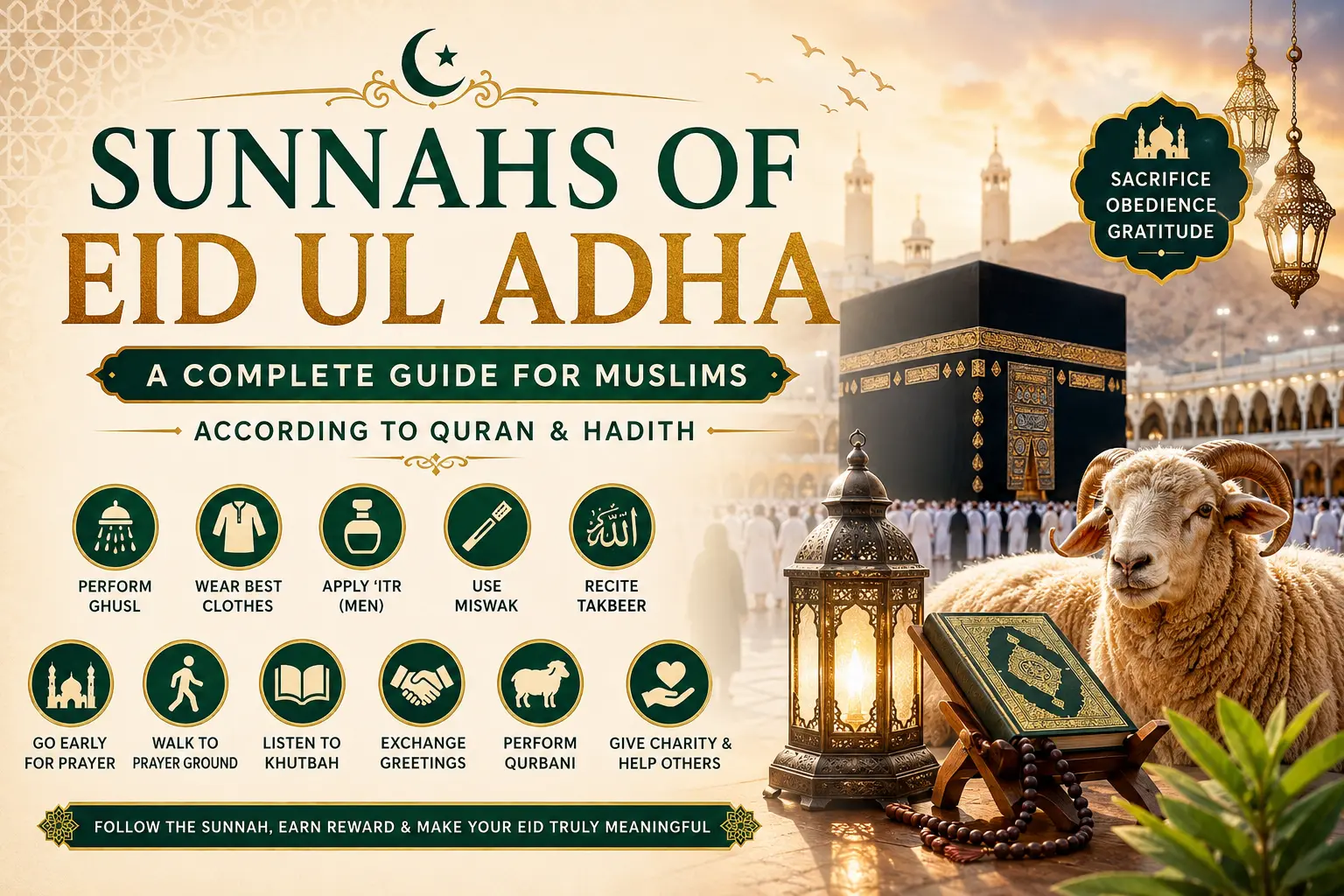
Complete Sunnahs of Eid ul Adha Day
1. Taking Ghusl Before the Eid Prayer
The first Sunnah of the day begins before you leave your bed. It is narrated that the companions of the Prophet ﷺ performed Ghusl (ritual bath) on the day of Eid. Ibn Abbas (RA) is reported to have bathed on the day of Eid, and this practice is established as a confirmed Sunnah.
The Ghusl of Eid is not like a regular shower. Approach it with intention — this is a purification of body in harmony with the spiritual renewal the day carries. You are about to stand before Allah in congregation. Cleanliness is not just hygiene; it is reverence.
Scholars of the four major madhabs all affirm that Ghusl on Eid is a recommended Sunnah (mustahabb). The ideal time is after Fajr, so that you enter the day fresh and prepared.
2. Wearing Your Best and Cleanest Clothes
The Prophet Muhammad ﷺ had a specific garment he would wear on the two Eids and on Fridays. He ﷺ took care of his appearance not out of vanity, but out of gratitude — gratitude to Allah for the blessing of the day, and respect for the gathering of Muslims.
Jabir ibn Abdullah (RA) narrated that the Prophet ﷺ had a cloak he wore on the two Eids and on Fridays. (Ibn Khuzaymah)
This Sunnah does not require expensive clothing. It requires intention. Wear what is clean, modest, and your best. For men, new or freshly washed clothing is ideal. The color white is beloved in Islam and many scholars recommend it on Eid. Children, too, should be dressed well — this teaches them from a young age that Eid is a day of dignity and joy.
3. Applying Perfume (for Men)
The Prophet ﷺ encouraged the use of fragrance, and Eid day is among the most appropriate occasions for it. The use of ‘itr (natural perfume) on Eid is a confirmed Sunnah for men. Women, however, are advised not to apply perfume if they are going to the public prayer ground, as per Islamic guidelines on their interaction in mixed public spaces.
Scent is one of the most powerful connectors to memory. When you apply ‘itr on Eid morning, let it be a reminder: this day is special. You are not just getting dressed — you are adorning yourself for an appointment with your Lord.
4. Performing the Miswak
Using the Miswak (tooth-stick) before prayer is a beloved Sunnah of the Prophet ﷺ on all occasions, but it carries particular significance on Eid — when you are about to join a large congregation and stand in prayer. The Prophet ﷺ said:
“Were it not that I would make things difficult for my Ummah, I would have commanded them to use the Miswak before every prayer.” (Bukhari, Muslim)
Today a Miswak is readily available in most Muslim communities. If you do not have one, a regular brush suffices — the intention to cleanse and purify before worship is the spirit of this Sunnah.
5. Saying the Takbeer of Eid
Perhaps one of the most recognizable and spiritually charged Sunnahs of Eid ul Adha is the Takbeer. From the Fajr prayer of the 9th of Dhul Hijjah (the day of Arafah) until the Asr prayer of the 13th of Dhul Hijjah — the days of Tashreeq — Muslims around the world raise their voices in unison:
Allahu Akbar, Allahu Akbar, La ilaha illallah, Allahu Akbar, Allahu Akbar, wa lillahil hamd.
(Allah is the Greatest, Allah is the Greatest, there is no god but Allah. Allah is the Greatest, Allah is the Greatest, and to Allah belongs all praise.)
In the Quran Allah say’s: “…and that you may glorify Allah for that to which He has guided you; and perhaps you will be grateful.” (Surah Al-Baqarah, 2:185)
The Takbeer is not background noise. It is a declaration. Say it loudly, say it meaningfully — in the masjid, in your home, in the street. The companions would say the Takbeer openly and collectively, and the streets would echo with it. Revive this beautiful practice wherever you are.
6. Eating Nothing Before the Eid Prayer (Eid ul Adha Specifically)
This Sunnah distinguishes Eid ul Adha from Eid ul Fitr in a very specific way. On Eid ul Fitr, the Prophet ﷺ would eat dates before going to prayer. On Eid ul Adha, however, he ﷺ would delay eating until after he returned from prayer and offered the Qurbani — then eat from the meat of his sacrifice.
Buraydah (RA) narrated: “The Prophet ﷺ would not go out on the day of Eid ul Adha until he had eaten, and on the day of Eid ul Fitr he would not eat until he had returned.” (Tirmidhi)
This is not about physical fasting. It is about symbolism. The first nourishment of Eid ul Adha ideally comes from the Qurbani itself — a circle of sacrifice and sustenance that ties the day together beautifully.
7. Going Early to the Eid Prayer
The Prophet ﷺ would go to the Eid prayer early. This is a Sunnah worth recovering in an age when we tend to arrive at the last minute. Going early allows you to find good seating, make dhikr, recite Takbeer in congregation, and mentally and spiritually prepare for the prayer.
The Eid prayer is one of the most communal acts in Islam — an ocean of believers standing shoulder to shoulder. Arriving early means you participate fully in that sea, rather than catching it from the shore.
Men are encouraged to walk to the prayer ground if it is feasibly close. The Prophet ﷺ walked to the Eid prayer, and this act of walking — in simple humility — was part of the day’s beauty.
8. Walking to the Prayer Ground (and Taking a Different Route Back)
The Prophet ﷺ used to go to the Eid prayer by one route and return by a different route. (Bukhari)
Scholars have offered several wisdoms for this practice: to greet and spread salaam to more people; to allow more of the earth to bear witness to the worship; to demonstrate Islam’s celebration openly across different parts of the city; and to bless different neighborhoods with one’s presence and Takbeer.
In a time when Eid can become insular and private, this Sunnah invites us outward — into the streets, into the community, greeting our neighbors, spreading joy.
9. Attending and Listening to the Khutbah
Unlike the Friday Khutbah, which is a condition for the validity of Jumu’ah prayer, the Eid Khutbah comes after the Eid prayer and is not obligatory to attend. However, the Prophet ﷺ consistently gave the Khutbah after Eid prayer and people would sit and listen.
Abdullah ibn Saib (RA) reported: “I attended the Eid prayer with the Messenger of Allah ﷺ, and when he finished the prayer, he said, ‘We are going to give a Khutbah; whoever wants to sit and listen may do so, and whoever wants to leave, may leave.'” (Abu Dawud)
Notice the Prophet’s ﷺ gentleness — he gave people the choice. And yet, his own practice was to deliver it and the companions loved to stay. The Khutbah of Eid ul Adha typically covers the meaning of sacrifice, the spirit of Qurbani, and reminders about Dhul Hijjah. Staying for it connects you to Islamic knowledge on one of the most significant days of the year.
10. Exchanging Eid Greetings with Fellow Muslims
Jubayr ibn Nufayr (RA) said: “The companions of the Prophet ﷺ, when they met each other on the day of Eid, would say to one another: ‘Taqabbalallahu minna wa minkum’ — May Allah accept (good deeds) from us and from you.” (Al-Mahamiliyyat, graded hasan by Ibn Hajar)
These words carry profound meaning. They are not just pleasantries — they are a du’a, a prayer for acceptance. When you say “Eid Mubarak” or “Taqabbalallahu minna wa minkum,” you are lifting your brother or sister in prayer. You are saying: I want what you’ve done today to count.
Embrace your family. Shake hands with your neighbors. Call relatives you have not spoken to in months. Eid is the Islamic occasion for mending bonds and expanding love.
11. Performing the Qurbani
The Qurbani — the sacrifice — is the defining act of Eid ul Adha. It commemorates the willingness of Prophet Ibrahim (AS) to sacrifice his son Ismail (AS) in obedience to Allah, and Allah’s mercy in providing a ram in the son’s place.
Allah says: “Their meat will not reach Allah, nor will their blood, but what reaches Him is piety from you.” (Surah Al-Hajj, 22:37)
The Prophet ﷺ performed the Qurbani himself and said: “There is nothing dearer to Allah during the days of Qurbani than the sacrificing of animals.” (Ibn Majah)
For those who are performing Qurbani, it is Sunnah to:
- Perform it personally if possible, or at least be present
- Say Bismillah and Allahu Akbar before the slaughter
- Divide the meat into thirds: one for your family, one to gift to relatives and friends, one to give to the poor
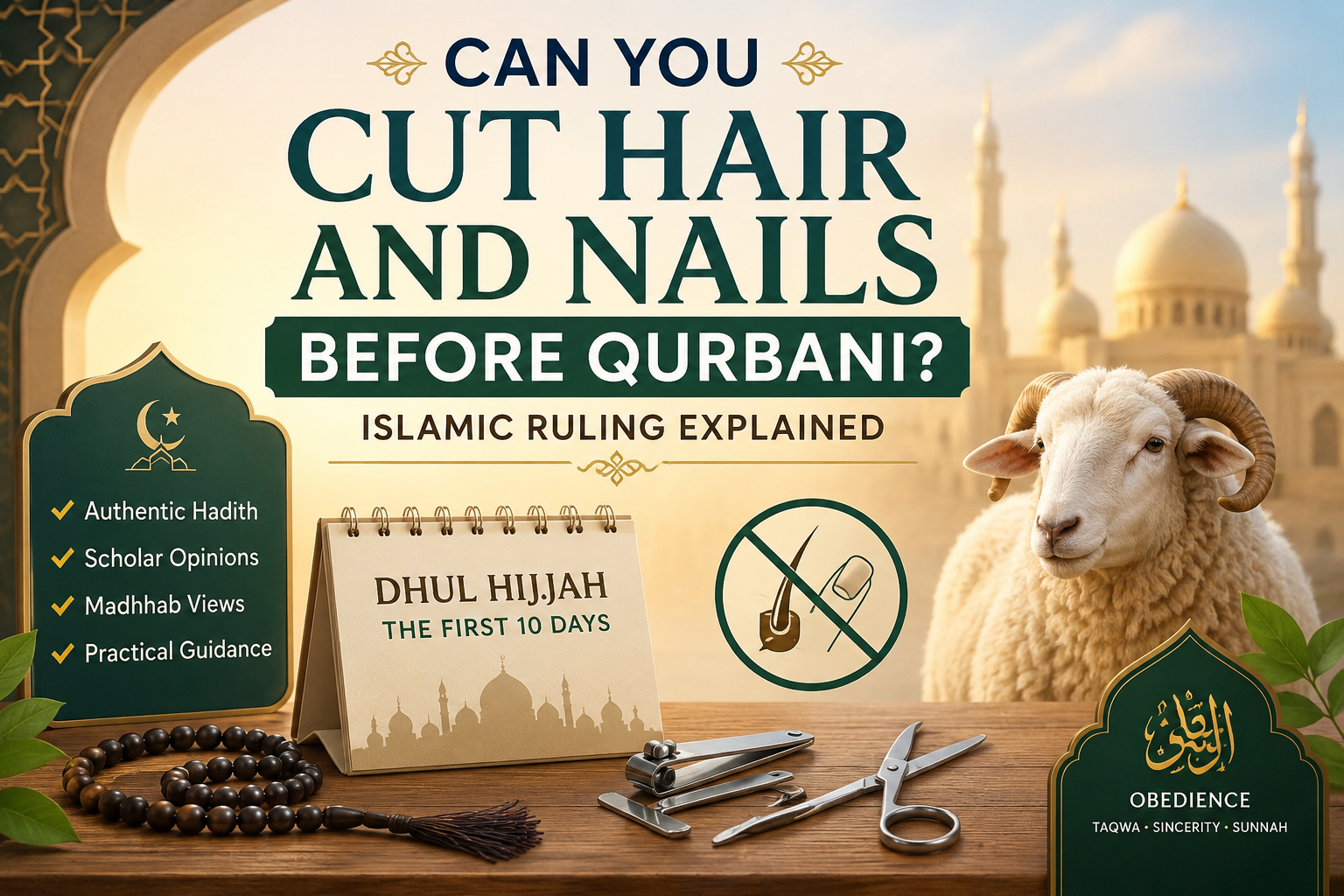
- Not cut your hair or nails from the 1st of Dhul Hijjah until after the sacrifice (for those intending Qurbani)
Qurbani is not just an annual tradition. It is an annual renewal of the foundational Islamic question: What are you willing to give for the sake of Allah?
12. Giving Charity and Strengthening Family Ties
Eid ul Adha is an occasion to remember those who have less. The Prophet ﷺ was the most generous of people, and his generosity increased during the days of Dhul Hijjah. Charity on Eid — whether through the distribution of Qurbani meat, giving money to the poor, or simply feeding neighbors — is in the spirit of the day.
Do not let Eid be a day of abundance only within your four walls. Call relatives. Visit the elderly. Check in on the lonely. These acts of connection are Sunnah in the deepest sense — they embody what Prophet Muhammad ﷺ taught us about community, compassion, and the bonds of brotherhood in Islam.
Common Mistakes Muslims Make on Eid ul Adha
Neglecting the Takbeer of Tashreeq
Many Muslims are unaware that the Takbeer should be said after every obligatory prayer from the 9th through the 13th of Dhul Hijjah. This is a communal Sunnah that has been largely abandoned in many communities. Revive it.
Staying Glued to Screens on Eid Morning
Eid morning is sacred. Spending it scrolling through social media before even making Ghusl or reciting Takbeer breaks the spiritual momentum of the day. Try to begin the morning with dhikr, Ghusl, and intention before reaching for your phone.
Skipping the Eid Prayer for Social Plans
Some Muslims treat Eid as primarily a social event and delay or skip the Eid prayer altogether. The Eid prayer is the cornerstone of the day. All the socializing and celebration that follows should be built on that foundation.
Delaying or Outsourcing Qurbani Without Awareness
Many people give money to charity organizations for Qurbani overseas — which is a valid and often excellent option — but lose the personal connection to the act of sacrifice. If you are giving through an organization, stay conscious of what is happening on your behalf. Make du’a at the time of slaughter. Feel the weight of Ibrahim’s (AS) story in your heart.
Arguing or Holding Grudges on Eid
Eid is a day of mercy and renewal. Carrying conflicts into Eid day — through sharp words, withheld salaam, or visible tension — contradicts the spirit of the celebration. The Prophet ﷺ taught us to be the first to give salaam, the first to forgive, the first to smile.
Spiritual Lessons from the Sunnahs of Eid ul Adha
Every Sunnah of Eid ul Adha carries a lesson that extends far beyond the day itself.
Ghusl teaches purification. We cannot approach sacred occasions with the dirt of ordinary days. Spiritually, Ghusl on Eid reminds us that worship requires preparation — both external and internal.
Beautiful clothing teaches gratitude. When you dress well on Eid, you are not being vain. You are acknowledging the blessing. You are saying: Allah has given me this, and I will honor it.
Delaying food until after Qurbani teaches priority. The sacrifice comes first. Our appetites wait. How often in modern life do we flip this order — feeding ourselves first and leaving worship for later?
The Takbeer teaches remembrance over noise. In a world saturated with entertainment and distraction, the Takbeer punctuates the day with meaning. Allah is greater — greater than my hunger, my plans, my social media feed, my anxieties.
The different route home teaches generosity of presence. By walking a different path back, the Prophet ﷺ spread his blessed presence more widely. He made himself available. He greeted more people. This is a model of living outward rather than inward.
And above all, Qurbani teaches that obedience sometimes looks like letting go of what you love most. Ibrahim (AS) did not understand why Allah was asking what He was asking. He simply trusted. And in that trust, everything was returned to him — and more.
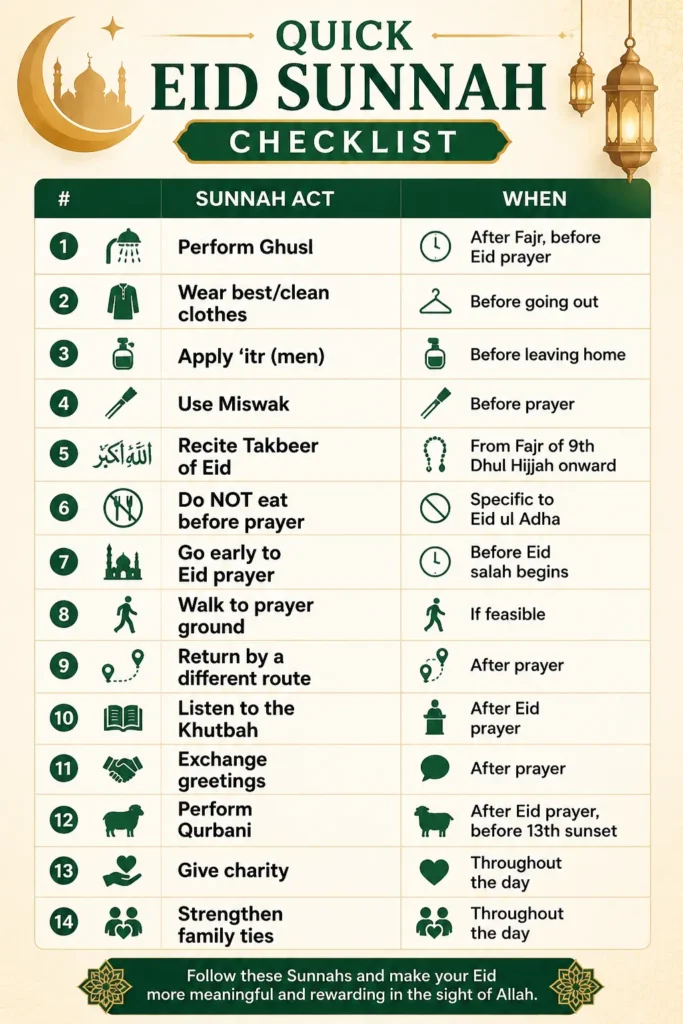
Quick Eid Sunnah Checklist
Frequently Asked Questions About Sunnahs of Eid ul Adha
1. What is the most important Sunnah of Eid ul Adha?
While all Sunnahs carry value, the most defining act of Eid ul Adha is the Qurbani (animal sacrifice), which is directly connected to the commemoration of Prophet Ibrahim (AS). Many scholars consider Qurbani to be wajib (obligatory) for those who are financially able. Beyond Qurbani, attending the Eid prayer is considered the communal cornerstone of the day.
2. Is it Sunnah to eat before the Eid ul Adha prayer?
No. Unlike Eid ul Fitr — when eating dates before the prayer is Sunnah — on Eid ul Adha the Prophet ﷺ delayed eating until after the prayer and Qurbani. Ideally, the first food of the day should be from the Qurbani meat.
3. What is Takbeer Tashreeq and when should it be said?
Takbeer Tashreeq refers to the specific Takbeer recited after every obligatory (fard) prayer, beginning from Fajr on the 9th of Dhul Hijjah until Asr on the 13th of Dhul Hijjah. The wording is: Allahu Akbar, Allahu Akbar, La ilaha illallah, Allahu Akbar, Allahu Akbar, wa lillahil hamd. This applies to both men and women, and both those at home and those performing Hajj.
4. Can women go to the Eid prayer?
Yes. The Prophet ﷺ explicitly encouraged women — including those who were menstruating and thus not praying — to attend the Eid gathering. Umm Atiyyah (RA) narrated: “We were ordered to bring out the menstruating women and the women behind veils on the two Eid festivals, to witness the goodness and the supplications of the Muslims.” (Bukhari)
5. What is the Sunnah greeting on Eid ul Adha?
The most authentic greeting narrated from the companions is: “Taqabbalallahu minna wa minkum” — May Allah accept (good deeds) from us and from you. Saying “Eid Mubarak” is widely practiced and permissible as a general expression of celebration.
6. Is it Sunnah to wear new clothes on Eid?
Wearing new clothes is encouraged but not obligatory. The Sunnah is to wear your best clothing, which could be new or simply your finest clean garment. The spirit is honor and gratitude, not consumerism.
7. What should I do if I cannot perform Qurbani myself?
If you are unable to perform Qurbani due to financial constraint, there is no sin. If you are able but prefer to donate through an organization for overseas Qurbani, that is valid and in many cases reaches those in greater need. Make du’a at the time of slaughter and keep the spirit of sacrifice alive in your heart throughout the day.
8. Can the Eid prayer be performed at home?
Scholars have differing views, but the strong majority position is that Eid prayer requires a congregation and should be performed at a masjid or open prayer ground. In cases of genuine hardship (illness, dangerous conditions), some scholars permit praying it individually at home. Consult your local imam for guidance specific to your situation.
A Final Word: Let Eid Be What It Was Meant to Be
Eid ul Adha is not a day to simply get through. It is a day to enter — with intention, with reverence, with joy, and with the weight of Ibrahim’s (AS) surrender resting gently on your shoulders as a reminder of who you aspire to be.
Every Sunnah listed here is a thread in that tapestry. Each Ghusl, each Takbeer, each step to the prayer ground — they are not checklists. They are acts of love. Love for the Prophet ﷺ who taught them. Worship of Allah who commanded them. Love for a community that comes alive on these days in a way unlike any other.
May Allah accept your Qurbani, your prayers, your sacrifice — and may He make this Eid ul Adha a turning point of taqwa and closeness to Him.
Taqabbalallahu minna wa minkum.